- English
- Español
- Português
- русский
- Français
- 日本語
- Deutsch
- tiếng Việt
- Italiano
- Nederlands
- ภาษาไทย
- Polski
- 한국어
- Svenska
- magyar
- Malay
- বাংলা ভাষার
- Dansk
- Suomi
- हिन्दी
- Pilipino
- Türkçe
- Gaeilge
- العربية
- Indonesia
- Norsk
- تمل
- český
- ελληνικά
- український
- Javanese
- فارسی
- தமிழ்
- తెలుగు
- नेपाली
- Burmese
- български
- ລາວ
- Latine
- Қазақша
- Euskal
- Azərbaycan
- Slovenský jazyk
- Македонски
- Lietuvos
- Eesti Keel
- Română
- Slovenski
- मराठी
- Srpski језик

Why Choose a Waterproof LED T10 Tube Light Housing?
A waterproof LED T10 tube light housing is worth choosing when your finished fixture will operate around moisture, airborne dust, or routine cleaning—and when you can validate the seal as a complete luminaire, not just as a collection of parts. For OEM programs, the appeal is straightforward: a polycarbonate tube, aluminum base, end caps, and an internal-driver layout can provide a workable platform for an enclosed linear light. The catch is equally straightforward. IP65 performance depends on assembly discipline, cable entry treatment, adhesive compatibility, and finished-product testing.
That distinction saves buyers from a common and costly mistake: specifying an “IP65 housing,” then assuming the assembled private-label fixture automatically carries the same protection level.
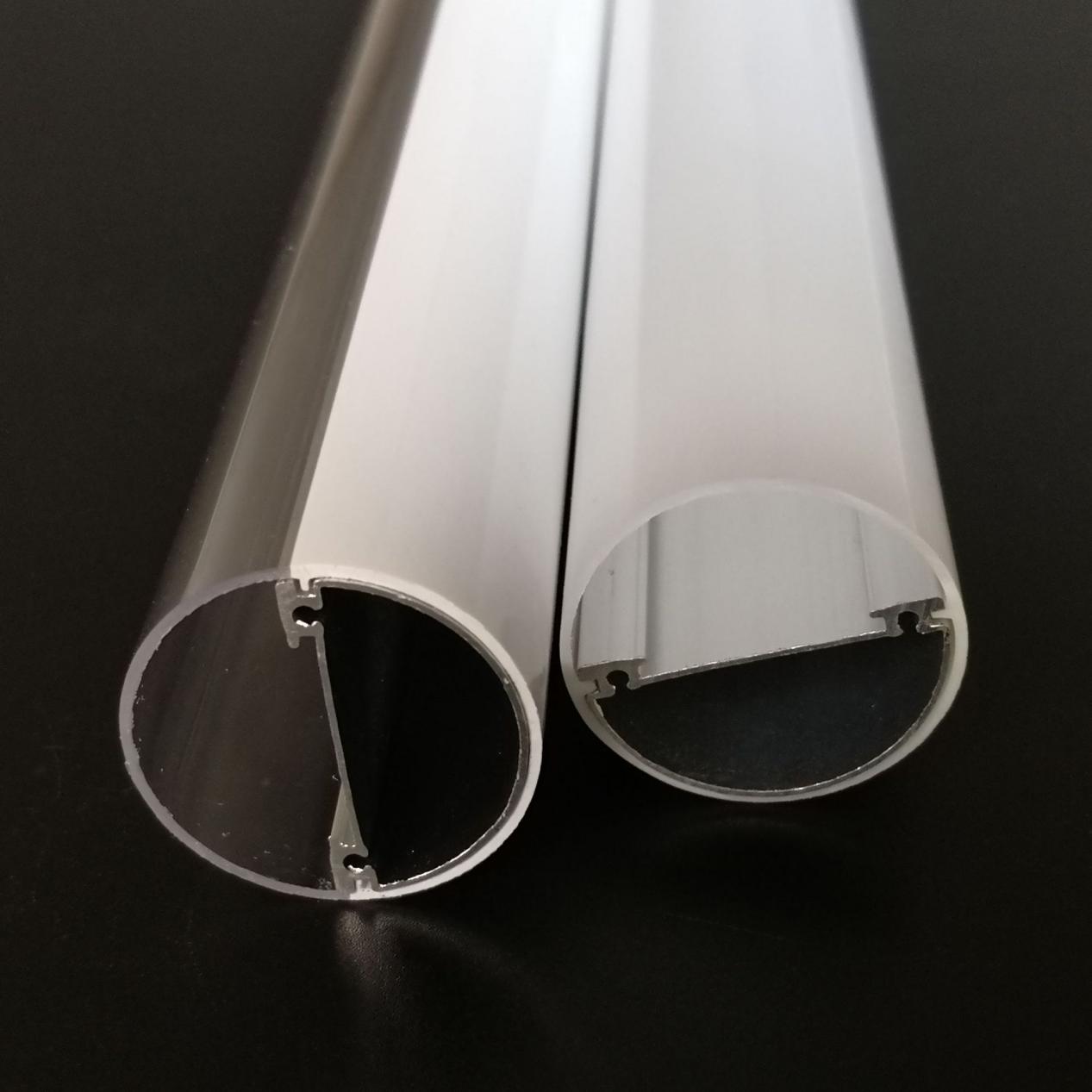
A Waterproof T10 Housing Adds Value When the Finished Fixture Faces Moisture, Dust, or Washdown Risk
Open or lightly protected tube constructions are often adequate in clean, dry interiors. They are a poor fit for locations where condensation forms, dust settles on energized parts, or a cleaning crew uses water around the installation. A waterproof T10 housing puts a physical barrier around the LED board, driver arrangement, and internal wiring. That barrier can reduce contamination and help prevent moisture from reaching electrical connections.
The value is operational, not cosmetic. Fewer contaminant paths can mean fewer premature failures from corroded terminals, dirty optics, or water intrusion at the ends of the fixture. The aluminum base also gives the assembly a defined mounting surface instead of asking a plastic tube alone to carry every mechanical and thermal duty.
For an OEM, the waterproof LED T10 tube light housing category is especially useful where a standard extrusion must be adapted for a branded fixture program. JE offers this format with a polycarbonate tube, 6063 aluminum base, plastic end caps, internal-driver configuration, and clear or frosted cover choices. Those are building blocks. They are not a substitute for fixture engineering.
How a Polycarbonate Tube, Aluminum Base, End Caps, and Glue Sealing Work as One Enclosure System
A sealed T10 fixture works because each part handles a different failure path. The polycarbonate tube forms the visible outer shell and protects the light-emitting assembly. Its clear or frosted treatment affects the emitted appearance: clear material preserves a more direct view of the LED source, while a frosted diffuser softens that view. The right choice depends on the LED layout, target visual comfort, and optical output required by the finished product.
Below it, the aluminum base provides a stable substrate for the assembly. End caps close the profile at both ends. Glue sealing can fill and bond intended joints, but it must suit the plastic, metal, and application environment. A sealant that appears acceptable on a first sample may fail after thermal cycling, cleaning-chemical exposure, or poor surface preparation. Assembly cleanliness matters. So does cure control.
Why the Seal at the End Cap and Cable Entry Matters More Than the Tube Body Alone
The long tube body is usually not where a waterproof luminaire fails. Trouble tends to start at interruptions: end-cap interfaces, wire exits, mounting penetrations, and any joint that depends on adhesive contact. A small gap at the cable entry can become a direct route for water or humid air. An end cap that is not seated consistently can create the same problem.
Ask how the cable is retained, how its exit is sealed, and what assembly features establish repeatable cap position. Then inspect production samples rather than relying on a cross-section drawing. A housing may have the right parts on paper while a rushed assembly process produces inconsistent seals.
How the Aluminum Base Supports PCB Mounting and Heat Transfer in an Internal-Driver Design
An aluminum base can support PCB placement and move heat away from the LED board more effectively than an all-plastic enclosure. In an internal-driver T10 design, that mechanical arrangement also affects where the driver sits, how conductors are routed, and how much room remains for insulation and service loops.
Still, aluminum is not a cure for an overloaded thermal design. Buyers should evaluate the actual LED board, driver heat, interface materials, mounting orientation, and ambient conditions in the completed fixture. A housing extrusion can help shed heat; it cannot compensate for poor component selection or inadequate thermal contact between the board and base.
Commercial Projects Where an IP65 T10 Tube Format Can Be a Practical Choice
Damp Utility Areas, Parking Structures, Canopies, and Service Corridors
These applications often call for more environmental protection than a standard indoor tube assembly. Utility rooms can see humidity and mechanical dust. Parking structures experience changing temperatures, vehicle residue, and damp air. Exterior canopies and service corridors may be exposed to wind-driven moisture without being fully weather-exposed in every direction.
An IP65 T10 tube format can be practical in such settings if the entire luminaire is designed, assembled, and tested for that duty. Installation details still matter: a properly sealed fixture can be undermined by unsuitable conduit connections, unprotected field splices, or mounting that permits water to sit against an entry point.
Private-Label and Specialty Fixtures That Need Custom Lengths or Optical Options
Private-label lighting programs frequently need a housing platform that can accommodate a project-specific length, cover appearance, or end-cap treatment without funding an entirely new product architecture. JE’s waterproof T10 range includes custom-length options and clear or frosted covers, which gives manufacturers room to tailor a fixture to its intended visual and installation requirements.
That flexibility has limits. A custom length changes more than shipping dimensions. It can affect PCB design, driver placement, wiring, mounting points, deflection, and the way end caps are sealed. Treat custom work as an engineering change, not a simple cut-to-length request. For programs needing a defined enclosure starting point, review the available T10 polycarbonate tube and aluminum base options alongside the finished-fixture design.
IP65 Is a Finished-Luminaire Claim, Not a Claim Made by the Housing Components Alone
This is the line U.S. buyers need to hold. JE identifies IP20 and IP65 versions in its waterproof T10 category, but an IP rating for a market-ready light must be supported by the completed product as built. The rating is affected by end caps, adhesive application, cable entry, wiring, any mounting hardware that penetrates the enclosure, and the final assembly process.
Do not transfer an IP65 label from an extrusion or component set directly onto your fixture documentation. Confirm the intended ingress-protection target with the supplier, define the approved assembly method, and arrange testing for the exact configuration you will sell. Changes that look minor—another cord, a different end cap, a revised wire exit—can alter the result.
Why an IP20 Screw-Installed T10 Construction May Be Better for Serviceable Indoor Fixtures
Waterproofing is not automatically the better choice. In dry indoor locations, an IP20 T10 construction with screw-installed end caps may make more sense when service access is a priority. A technician can open the fixture more readily for driver replacement, internal inspection, or rework. That can be valuable in commercial interiors with planned maintenance.
The trade-off is reduced protection against moisture and dust. Screw-installed construction also needs attention to loosening, alignment, and visible hardware. Use it where the environment genuinely supports it, not because it is easier to assemble. If the fixture is destined for damp or washdown-adjacent spaces, serviceability should not be used to excuse an inadequate enclosure rating.
What U.S. OEM Buyers Should Confirm Before Sampling a Waterproof T10 Housing
Before you order samples, settle the points that determine whether the housing can become a dependable finished fixture:
- Environmental target: Define the actual moisture, dust, cleaning, and installation exposure. Do not specify IP65 by habit.
- Finished-fixture validation: Establish who owns ingress testing and which final configuration will be tested.
- Sealing process: Review end-cap fit, adhesive selection, surface preparation, cure conditions, and cable-entry sealing.
- Electrical and thermal layout: Check PCB fit, driver location, wire routing, insulation clearances, and heat transfer to the aluminum base.
- Optical requirement: Choose clear or frosted polycarbonate based on the actual LED board and desired appearance, not a catalog image.
- Customization control: Document length, end caps, cable exit, and mounting details before approving production tooling or samples.
Send that requirements package with your request for a custom waterproof T10 housing sample. It gives the supplier something engineering teams can act on and gives your own team a clear basis for reviewing the finished luminaire.