- English
- Español
- Português
- русский
- Français
- 日本語
- Deutsch
- tiếng Việt
- Italiano
- Nederlands
- ภาษาไทย
- Polski
- 한국어
- Svenska
- magyar
- Malay
- বাংলা ভাষার
- Dansk
- Suomi
- हिन्दी
- Pilipino
- Türkçe
- Gaeilge
- العربية
- Indonesia
- Norsk
- تمل
- český
- ελληνικά
- український
- Javanese
- فارسی
- தமிழ்
- తెలుగు
- नेपाली
- Burmese
- български
- ລາວ
- Latine
- Қазақша
- Euskal
- Azərbaycan
- Slovenský jazyk
- Македонски
- Lietuvos
- Eesti Keel
- Română
- Slovenski
- मराठी
- Srpski језик

What to Look for When Buying a LED Tri-proof Lamp Housing?
What should you look for when buying a LED tri-proof lamp housing? I’ve been on both sides — selling to customers and sourcing components from suppliers. Here’s what I’ve learned about avoiding costly mistakes.
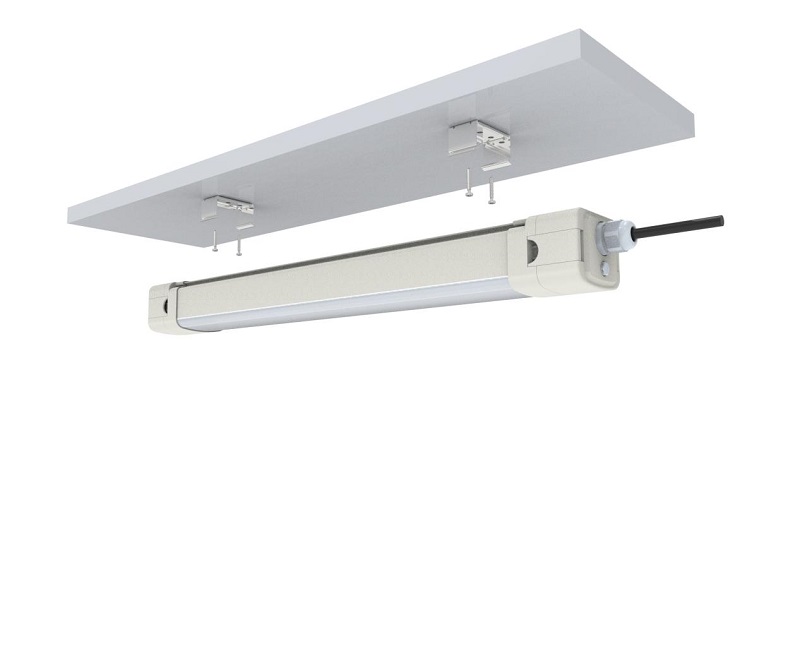
1. Check the Real IP Rating, Not Just the Marketing Claim
Some suppliers claim “IP65” protection, but the housing may still have exposed screw holes or weak snap-fit seals that are not truly waterproof. Always ask for the official IP test report. Better yet, perform a simple water test yourself.
I’ve seen “IP67” housings leak after being sprayed with a garden hose. True waterproof performance depends on design details such as:
- Continuous silicone gaskets
- Compression seals around cable entries
- Proper drainage channels to divert water away from critical areas
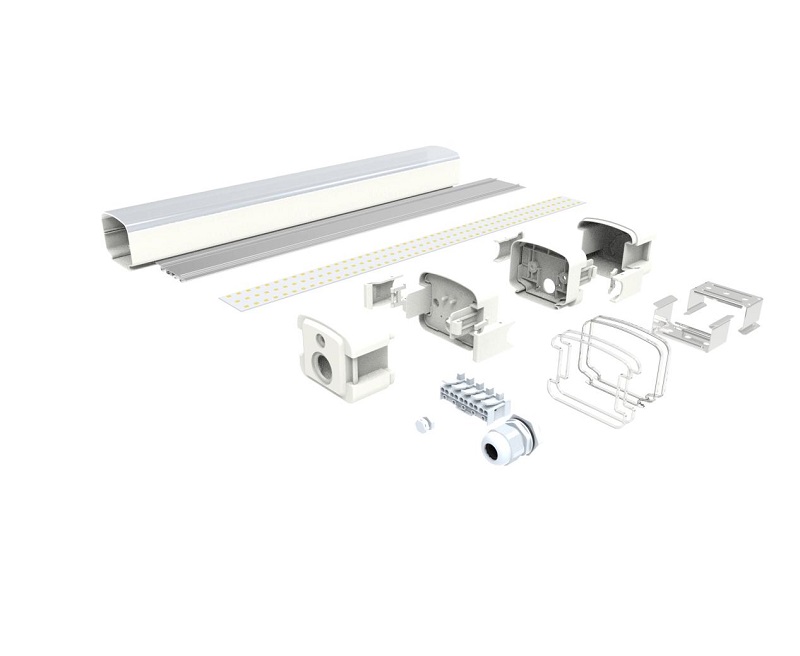
2. Look at the Gasket Material
Low-cost housings often use EPDM or PVC foam gaskets. These materials tend to dry out, harden, and crack after a few years of use.
Silicone gaskets are more expensive but provide much better long-term durability. For harsh environments involving chemicals or extremely low temperatures, fluorosilicone or FKM (Viton) is a better choice.
Always ask suppliers:
- What gasket material is used?
- How is aging resistance tested?
- Are there accelerated weathering reports available?
3. Examine the Diffuser Material and Coating
Polycarbonate (PC) is the standard diffuser material for LED tri-proof lights because it offers excellent impact resistance and durability. However, not all PC materials are equal.
UV-stabilized polycarbonate resists yellowing caused by sunlight exposure. Cheap diffusers may turn yellow or brown within a year outdoors.
It’s also important to check whether the diffuser has a hard protective coating. Scratches can trap dirt and significantly reduce light output over time.
Acrylic (PMMA) provides higher light transmission — around 92% compared to 88% for PC — but it is more brittle. Unless maximum transparency is critical, polycarbonate is usually the better option for tri-proof applications.
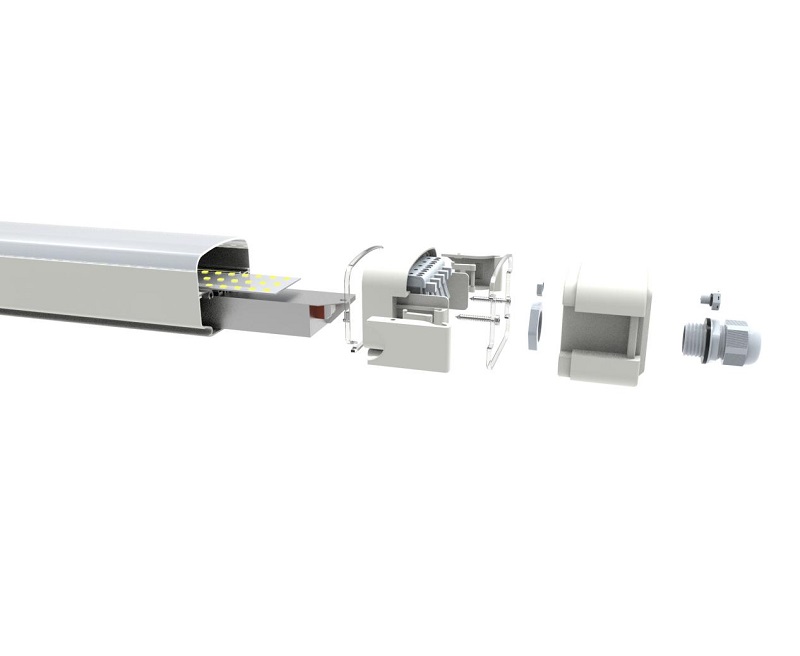
4. Verify Corrosion Protection on Metal Parts
Most aluminum housings are protected by either anodizing or powder coating:
- Anodizing: thinner but harder surface protection
- Powder coating: thicker protection but may chip if damaged
For coastal, humid, or chemical environments, ask about:
- Powder coating thickness (recommended: at least 60 microns)
- Salt spray test performance (recommended: 500+ hours)
Small hardware components matter too. Screws, clips, and cable glands should use:
- 304 stainless steel for general indoor use
- 316 stainless steel for outdoor or marine environments
I’ve seen entire fixtures fail because inexpensive steel screws rusted and seized.
5. Consider Thermal Management
Because tri-proof housings are sealed, heat can easily build up inside. Excessive heat reduces LED efficiency and shortens lifespan.
A high-quality housing should include:
- Thick aluminum base plates
- Effective heat-conducting structures
- Sufficient external surface area or cooling fins
Some low-cost housings use very thin aluminum shells with poor thermal conductivity, causing LEDs to overheat.
Whenever possible:
- Request thermal simulation data
- Test samples with actual LED modules installed
- Measure operating temperature after several hours
If the LED junction temperature exceeds 85°C, the thermal design may not be adequate.
6. Evaluate Installation and Maintenance Features
Good installation design saves time and reduces maintenance costs. Electricians will appreciate features such as:
- Tool-less clip opening systems
- Multiple cable entry options
- Slide-adjustable mounting brackets
- Clearly marked polarity and grounding points
I once purchased a housing that required removing 16 tiny screws just to replace the driver. That experience alone taught me the value of maintenance-friendly design.
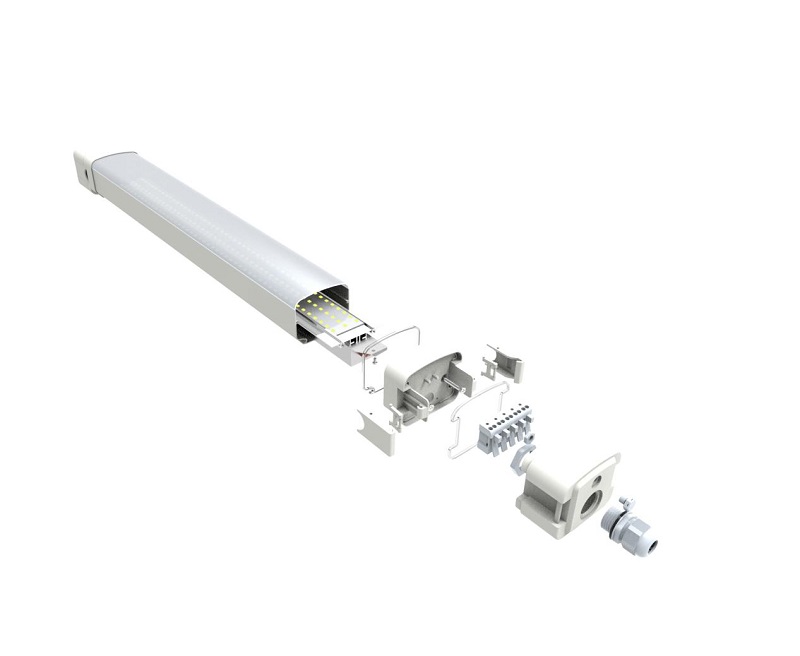
7. Verify Certifications Carefully
Different markets require different certifications:
- CE and RoHS for Europe
- UL, cUL, or ETL for North America
- DLC for energy rebate qualification
Never rely solely on printed labels. Always verify the certification number with the official certification body because counterfeit labels do exist.
For complete LED fixtures, check for:
- LM79 reports
- LM80 reports
- IP rating reports
- IK impact resistance reports
8. Always Perform Sample Testing
Never place a large order without thoroughly testing samples first. I normally order at least three samples and perform practical stress tests, including:
- Water spray testing from multiple angles
- Freezer testing followed by room-temperature exposure
- Checking for internal condensation
- Scratch testing on the diffuser surface
- Repeated opening and closing of clips
- Continuous operation at full power for one week
If the sample fails under simple testing conditions, mass production quality problems are almost guaranteed.
About JE
JE is a professional factory specializing in the production of LED tri-proof lamp housings and kits. With extensive manufacturing experience and strict quality control, JE provides reliable solutions for industrial, commercial, and outdoor lighting applications.
For more details, please visit:
Contact Information:
- Email: sales@jeledprofile.com
- Tel / WhatsApp / WeChat: +86 13427851163