- English
- Español
- Português
- русский
- Français
- 日本語
- Deutsch
- tiếng Việt
- Italiano
- Nederlands
- ภาษาไทย
- Polski
- 한국어
- Svenska
- magyar
- Malay
- বাংলা ভাষার
- Dansk
- Suomi
- हिन्दी
- Pilipino
- Türkçe
- Gaeilge
- العربية
- Indonesia
- Norsk
- تمل
- český
- ελληνικά
- український
- Javanese
- فارسی
- தமிழ்
- తెలుగు
- नेपाली
- Burmese
- български
- ລາວ
- Latine
- Қазақша
- Euskal
- Azərbaycan
- Slovenský jazyk
- Македонски
- Lietuvos
- Eesti Keel
- Română
- Slovenski
- मराठी
- Srpski језик

What is a LED Tri-proof Lamp Housing?
Hey there. If you’ve been around the lighting industry for a while, you’ve probably heard the term “tri-proof” thrown around. But what does it actually mean? I’m a R&D engineer at JE company that makes these things, and I’ve spent years tweaking extrusions, testing seals, and arguing with suppliers about gasket materials. So let me break it down for you in plain English.
So, What Exactly is an LED tri-proof lamp housing?
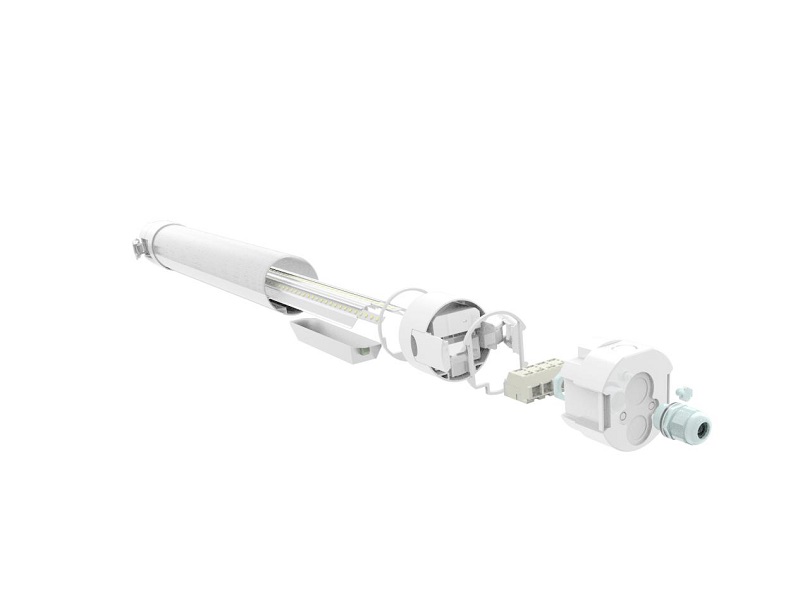
An LED tri-proof housing is basically the protective housing that surrounds the LED light source, the driver, and all the sensitive electronics inside. The “tri-proof” part refers to three specific protections: waterproof, dustproof, and corrosion-proof. Some people also add impact resistance or UV resistance, but the core three are water, dust, and corrosion.
Think of it as a rugged suit of armor for your LED light. Without it, your LEDs would fail quickly in harsh environments. Moisture gets in, dust blocks the light output, and corrosive gases eat away at the solder joints. The housing keeps all that bad stuff out while letting the light shine through.
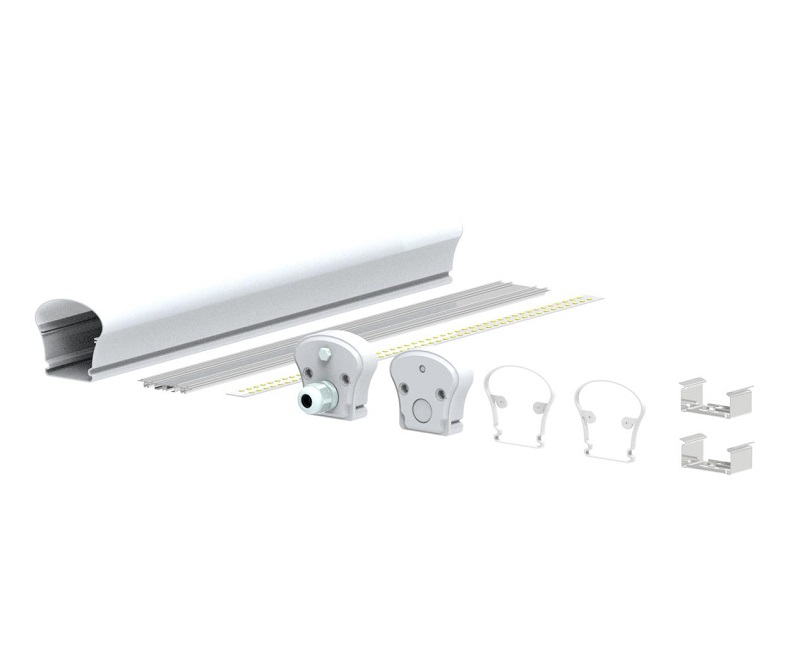
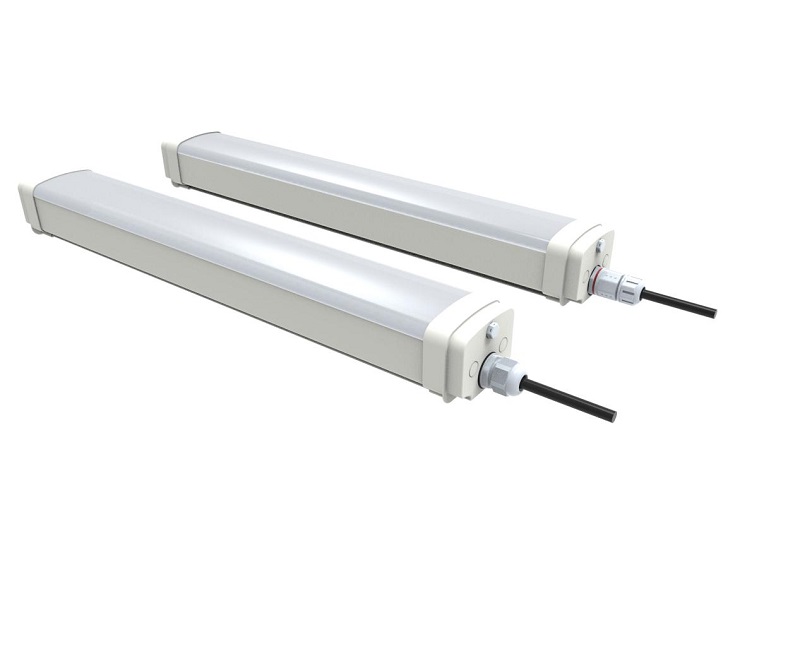
Most tri-proof housings are made from extruded aluminum for the body (because aluminum dissipates heat really well) and a polycarbonate (PC) or acrylic (PMMA) diffuser on the front. The ends are sealed with silicone gaskets and stainless steel clips. You’ve probably seen these hanging in parking garages, cold storage rooms, or subway tunnels.
What Makes a LED Tri-proof Lamp Housing Different from a Regular LED Housing?
Regular LED housings are fine for offices or homes. But put them in a car wash or a meat processing plant, and they’ll die in weeks. Tri-proof housings have several key features that set them apart.
1. High Ingress Protection (IP) Rating
The most obvious difference is the IP rating. Tri-proof housings usually start at IP65, which means completely dust-tight and protected against low-pressure water jets. Many go up to IP66 (stronger water jets) or even IP67 (temporary immersion). I’ve tested IP68 units that survive being underwater for hours, but that’s overkill for most jobs.
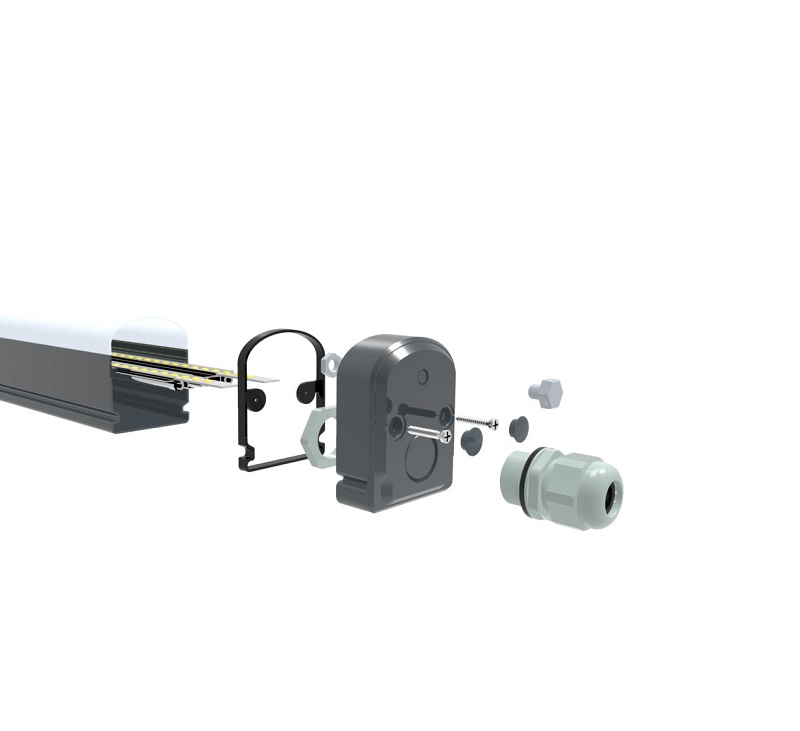
How do we get those ratings? It’s all about the seals. The end caps are compression-fitted with silicone gaskets. The diffuser snaps into a groove filled with a continuous seal. Every screw hole is isolated. We even use breather vents (with membranes) to equalize pressure without letting water in.
2. Corrosion Resistance
This is the part that catches people off guard. You can have an IP66 housing, but if it’s made from cheap steel or low-grade aluminum, it’ll rust in a coastal or chemical environment. Real tri-proof housings use marine-grade aluminum (like 6063 or 6061) with a special coating. Some are powder-coated, others are anodized. For extreme cases, we use stainless steel 304 or 316.
The diffuser also matters. Polycarbonate resists most chemicals, but some solvents can craze it. Acrylic is clearer but more brittle and less chemical-resistant. We usually recommend PC for tri-proof applications.
3. Impact Resistance
Regular housings might crack if you hit them with a ladder. Tri-proof housings need to survive forklifts, falling tools, and even occasional vandalism. That’s why we use polycarbonate diffusers – they’re almost unbreakable. The aluminum body is thick-walled, typically 1.5mm to 2.5mm. We also add reinforcing ribs inside the extrusion.
The standard test is IK rating. Most tri-proof housings are IK08 or IK10, meaning they can withstand 5 to 20 joules of impact. For comparison, a 1.5kg hammer dropped from 400mm gives about 6 joules. So IK10 is pretty tough.
4. Temperature Tolerance
LEDs hate heat, but tri-proof housings often work in extreme temperatures – from freezing cold storage (-30°C) to hot industrial ovens (50°C or more). The housing has to manage heat dissipation while keeping seals flexible. Silicone gaskets work from -40°C to 200°C, so that’s fine. But the aluminum body needs enough surface area to cool the LEDs. We design fins into the extrusion for that reason.
5. Easy Installation and Maintenance
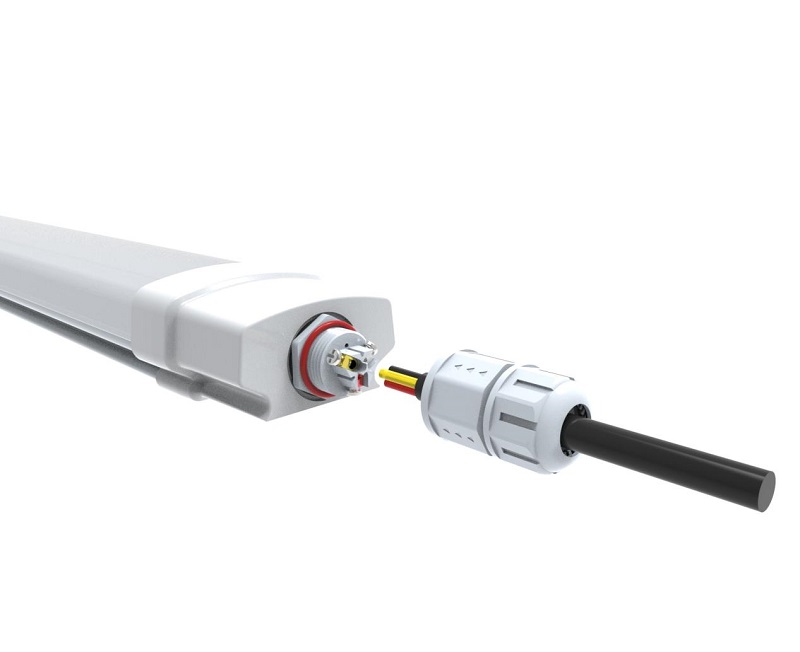
A good tri-proof housing doesn’t just protect; it also makes life easier for electricians. We use stainless steel clips that flip open without tools. The end caps have knockouts for different conduit sizes. Some models have a sliding mounting bracket so you can adjust the position after the bracket is screwed to the ceiling. Trust me, I’ve watched electricians struggle with badly designed housings. The small details matter.
About JE
JE is a factory specializing in the production of LED tri-proof lamp kits; for more details, please refer to:
For more details, please contact:
Email: sales@jeledprofile.com
Tel/Whatsapp/Wechat: 0086 13427851163