- English
- Español
- Português
- русский
- Français
- 日本語
- Deutsch
- tiếng Việt
- Italiano
- Nederlands
- ภาษาไทย
- Polski
- 한국어
- Svenska
- magyar
- Malay
- বাংলা ভাষার
- Dansk
- Suomi
- हिन्दी
- Pilipino
- Türkçe
- Gaeilge
- العربية
- Indonesia
- Norsk
- تمل
- český
- ελληνικά
- український
- Javanese
- فارسی
- தமிழ்
- తెలుగు
- नेपाली
- Burmese
- български
- ລາວ
- Latine
- Қазақша
- Euskal
- Azərbaycan
- Slovenský jazyk
- Македонски
- Lietuvos
- Eesti Keel
- Română
- Slovenski
- मराठी
- Srpski језик

What is a Tri-proof Light Housing?
Hello everyone, I'm a research and development engineer at JE Company. I spend far more time researching lamp housings than I'd like to admit; I disassemble and assemble them, and observe their damage (or survival) in various harsh environments. So, let me explain what a tri-proof light housing actually is in plain language, without any marketing gimmicks.
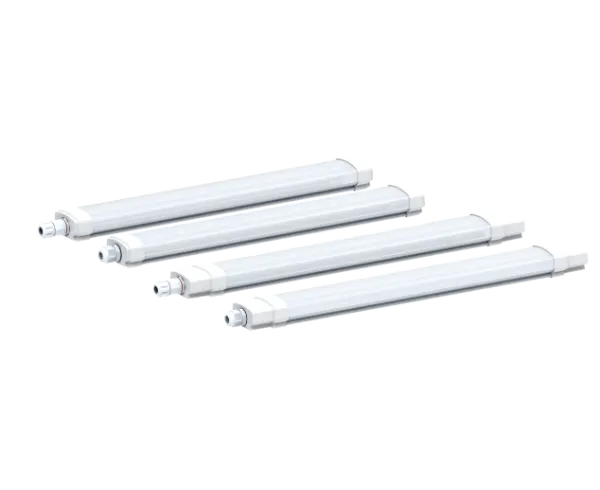
First, what exactly does “tri-proof light housing” mean?
You might often see this term on product specifications and think it's irrelevant, but rugged is actually a promise. It means the lamp housing is designed to withstand the three major enemies of lighting equipment: dust, water, and corrosion.
Think about that ordinary light bulb in your garage. After a week, it'll be covered in dust. Then you accidentally spill some water—and you're done for. If you work in salt water, chemicals, or even just high humidity, a cheap metal lamp housing will rust like crazy. Rugged lamp housings are designed to say "no" to these three enemies.
But the key point is—not all rugged lamps are the same. Housing materials, seals, design details—these all affect their protective performance. So, let's take a closer look at some of the most common materials on the market.
1. Heat Dissipation – Which has the best heat dissipation performance?
LED lights are extremely sensitive to heat. This is a law of physics. If the casing cannot dissipate heat from the LED chip, the light will dim over time and eventually fail.
Aluminum Profile: Undoubtedly, 6065 aluminum is the best choice. Aluminum has excellent thermal conductivity. We use aluminum profiles with heat sink fins to create a natural convection heat dissipation path. In a 24-hour combustion test, the junction temperature of an aluminum casing was 15-20°C lower than that of a plastic casing. This means a lifespan that can be extended by several years.
PC (Polycarbonate): Plastic is a heat-insulating material. Therefore, PC casings have poor heat dissipation performance. Some designs embed aluminum heat sinks internally, but this increases cost and complexity. Pure PC material? Unless you want the light fixture to fail prematurely, it is not recommended for any power above 30 watts.
2. Impact Resistance – Drops, Collisions, and Forklift Impacts
Industrial environments are harsh, and lighting fixtures are frequently subjected to impacts.
Polycarbonate (PC): This material is incredibly tough. Unlike glass, polycarbonate is not easily broken, and it doesn't crack easily. It can withstand hammer blows (I've tried it myself) and will simply bounce off. This is why polycarbonate is commonly used in food processing plants, parking lots, and any location with height restrictions. IK10 grade polycarbonate housings are a reality.
Therefore, all JE's rugged light housings use PC as the primary raw material to meet the demands of this application environment.
3. Corrosion Resistance – The Invisible Killer
"Rugged" truly reflects its value. Corrosion can erode the housing over months or even years, and you might not notice until the light flickers and then goes out.
Polycarbonate (PC): Plastic doesn't rust. Absolutely not. This is one of the reasons why JE uses this raw material.
4. Cost – Your Boss Will Care
This is something everyone cares about.
PC: The cheapest. Injection-molded PC housings are significantly cheaper than metal housings. They're so user-friendly, meet customer needs, and offer the lowest cost, making them the best choice. Furthermore, we use high-quality aluminum profiles internally, providing excellent heat dissipation and durability, and at the most competitive price in the lighting heat dissipation industry.
JE is a factory specializing in the production of LED tri-proof light housing, for more details, please refer to:
For more details, please contact: sales@jeledprofile.com
Tel/Whatsapp/Wechat: 0086 13427851163