- English
- Español
- Português
- русский
- Français
- 日本語
- Deutsch
- tiếng Việt
- Italiano
- Nederlands
- ภาษาไทย
- Polski
- 한국어
- Svenska
- magyar
- Malay
- বাংলা ভাষার
- Dansk
- Suomi
- हिन्दी
- Pilipino
- Türkçe
- Gaeilge
- العربية
- Indonesia
- Norsk
- تمل
- český
- ελληνικά
- український
- Javanese
- فارسی
- தமிழ்
- తెలుగు
- नेपाली
- Burmese
- български
- ລາວ
- Latine
- Қазақша
- Euskal
- Azərbaycan
- Slovenský jazyk
- Македонски
- Lietuvos
- Eesti Keel
- Română
- Slovenski
- मराठी
- Srpski језик

What is a T12 G13 End Cap?
If you've ever worked with fluorescent tubes or LED retrofit lighting, you've probably run into the term "G13 end cap." Maybe you've even held one in your hand without really thinking about it—it's just that little plastic piece at the end of the tube, right?
Well, yeah. But it's also a lot more than that.
Let me break it down for you in plain English.
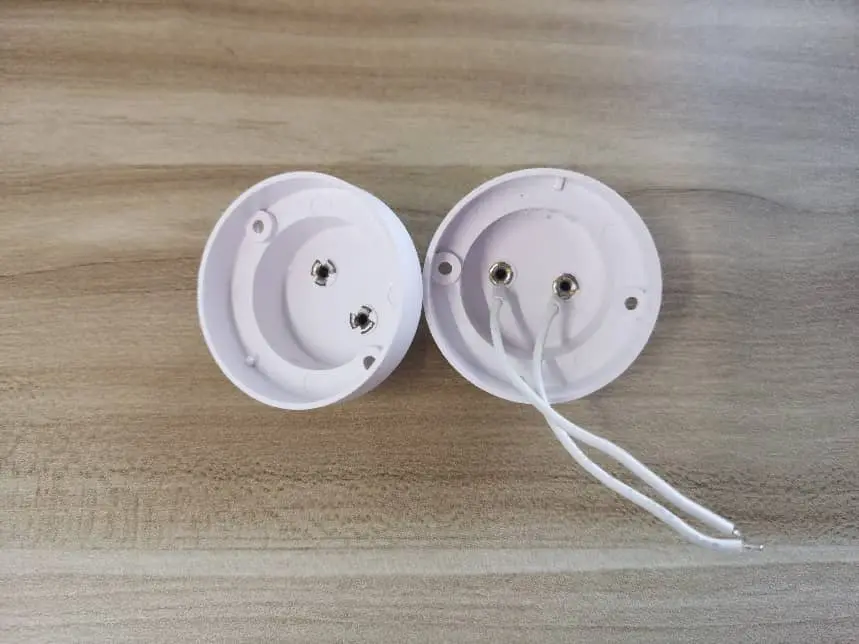
So, What Exactly Is a T12 G13 End Cap?
A T12 G13 end cap is the connector piece attached to each end of a T12 fluorescent or LED tube. "T12" refers to the tube diameter—1.5 inches, or about 38mm. "G13" tells you about the pins: it's a bi-pin base where the two pins are spaced exactly 13 millimeters apart center-to-center. That 13mm pin spacing is the whole reason it's called G13—the "G" stands for "glass" or just the bi-pin style, and the number is the pin distance in millimeters.
Think of it like this: the end cap is the "plug" that connects the tube to the fixture's socket. Without it, your tube is just a glass cylinder that doesn't do anything.
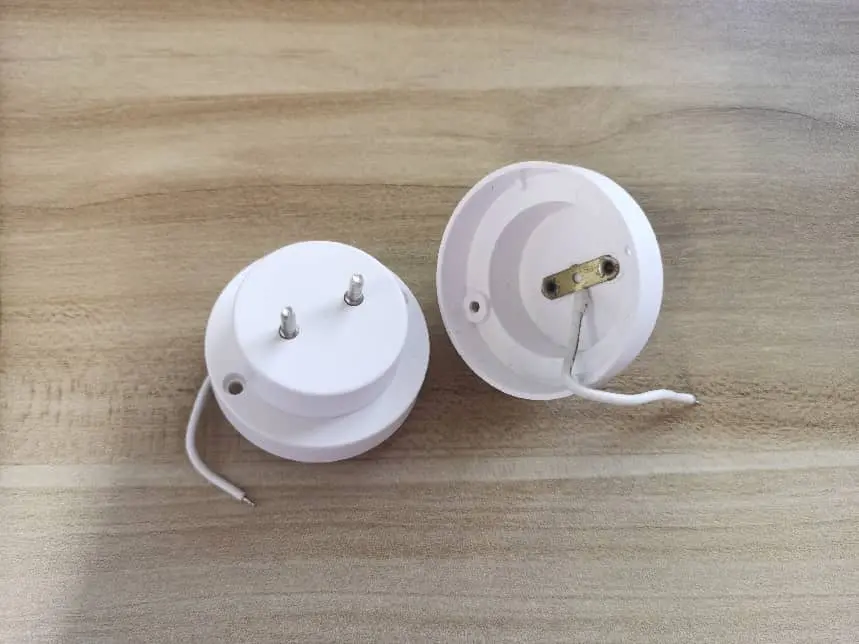
Why Does the G13 Matter?
Here's the thing—G13 isn't just for T12 tubes. It's also used on T8 tubes. So when you see a G13 end cap, it means that tube will fit into any fixture designed for a G13 socket, regardless of whether it's T8 or T12. That's a pretty big deal when you're dealing with retrofits.
The pin spacing is what makes it compatible. G5 bases, by contrast, have a 5mm pin spacing and are used for T5 tubes. You can't mix them up—a G13 tube won't fit a G5 socket and vice versa. So if you're replacing old fluorescent tubes with LEDs, knowing your end cap type is the first thing you need to figure out.
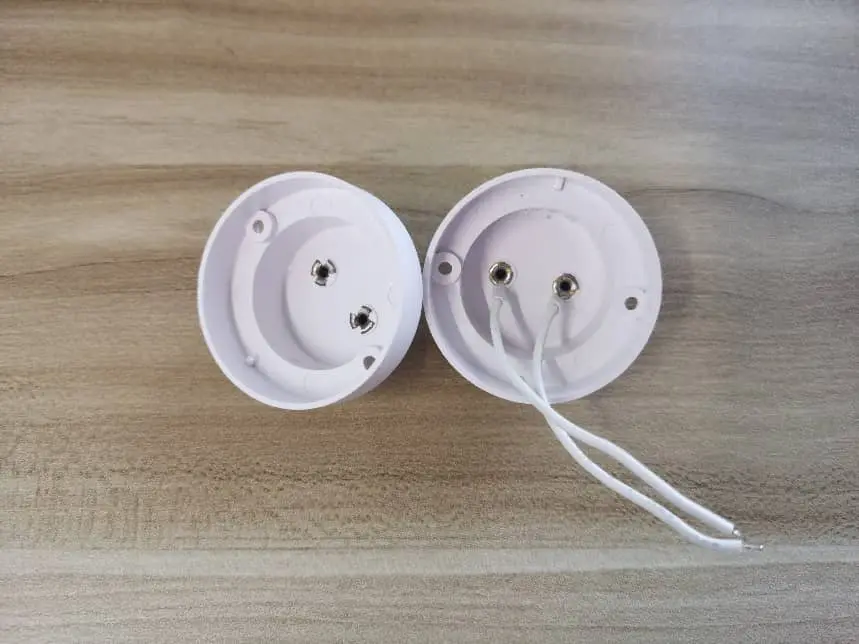
Key Features of a T12 G13 End Cap
Let's get into the nitty-gritty. What actually makes a G13 end cap work?
- Pin spacing: 0.5 inches (12.7mm), which is the G13 standard. That 13mm is close enough.
- Electrical ratings: A typical G13 end cap assembly is rated for 250V AC/DC and 2 amps maximum. It can handle a dielectric withstanding voltage of 1500V AC.
- Materials: The housing is usually made from high-temperature thermoplastic with a UL 94V-0 flame rating. That means it won't catch fire easily, which is kind of important when you're dealing with electricity.
- Contact plating: The pins are typically plated with tin (Sn). It's not flashy, but it gets the job done—good conductivity, decent corrosion resistance.
- Temperature range: These things are built to survive anywhere from -40°C to 120°C. So whether you're in a freezer or a hot warehouse, the end cap isn't going to melt or crack.
Where Do You Actually Use T12 G13 End Caps?
Honestly? Everywhere.
Commercial lighting retrofits are probably the biggest use case. Think about big-box stores, warehouses, office buildings—places with rows upon rows of fluorescent tubes. When they switch to LED, they don't want to replace all the fixtures. That's expensive and time-consuming. Instead, they use LED tubes with G13 end caps that drop right into the existing sockets.
Industrial facilities are another big one. High-bay lighting in factories, parking garages, manufacturing plants—these places have tons of T12 fixtures, and retrofitting with G13 end cap tubes is a straightforward way to cut energy costs.
Schools and hospitals also use them, especially for emergency lighting where keeping the existing fixture frame matters.
And here's a fun fact: T12 tubes with G13 caps have been around forever, but major manufacturers stopped making them back in 2012. So if you've still got T12 fixtures in your building, you're either running on old stock or you've switched to LED retrofits. Guess which one makes more sense?
JE is a factory specializing in the production of T12 G13 End Cap, for more details, please refer to:
For more details, please contact: sales@jeledprofile.com
Tel/Whatsapp/Wechat: 0086 13427851163