Source an OEM housing for LED tube assembly—not a ready-to-install T5 replacement lamp
A T5 lamp housing is the mechanical enclosure used to build an LED tube assembly. It is not automatically a finished lamp. JE’s housing configuration centers on a 6063-T5 aluminum base, a polycarbonate diffuser, end caps and the space needed for an LED PCB. The LED board, driver, wiring and electrical approvals may fall outside the housing quotation unless they are specifically listed.
That distinction should drive your first purchasing decision. If you manufacture or assemble LED tubes, an OEM housing gives you control over the light source, driver, wiring layout and final testing. If you need a lamp that can be installed directly into an existing fixture, ask for a complete-lamp quotation instead of assuming a housing kit is electrically finished.
Start with the JE T5 lamp housing options, then match the cross-section and components to your assembly drawing. The nominal T5 name is useful for identifying the product family, but it does not settle PCB fit, end-cap geometry or electrical compatibility.
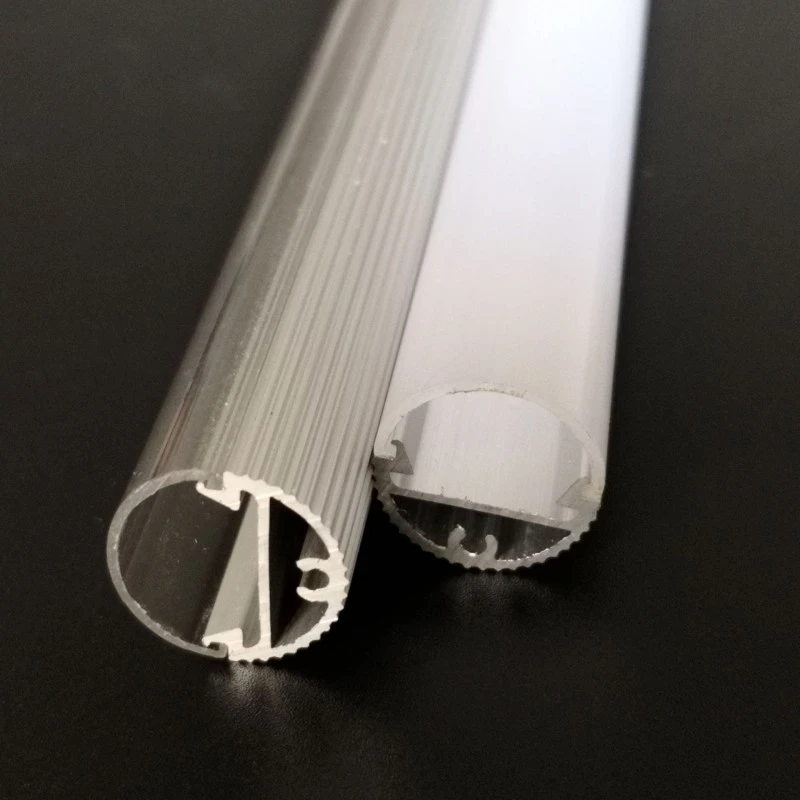
Define the component scope before comparing housing quotations
Housing quotations are only comparable when they cover the same parts. A low unit price can simply mean that the diffuser, end caps, machining or packaging has been left out. Ask for a line-item scope rather than a single description such as “T5 housing set.”
Confirm whether the quote includes the aluminum base, PC diffuser, end caps and any requested accessories
For each quoted assembly, identify the quantity and condition of every component:
- Aluminum base: confirm the quoted cross-section, 6063-T5 material designation, length and any requested secondary work.
- PC diffuser: state clear, frosted or striped rather than writing only “cover.” Ask whether the diffuser is supplied cut to the same nominal length as the base.
- End caps: identify standard or specially designed parts and request the interface drawing. Do not assume that an end cap includes pins, wiring or a driver cavity.
- Accessories: list any clips, fasteners, connectors, labels or packaging parts you expect. Their inclusion has not been established unless the quotation names them.
Also specify whether parts should arrive loose, grouped as component sets or partially assembled. That choice affects incoming inspection, packing and the work required on your production line.
Identify the LED PCB, driver, wiring and other buyer-supplied or separately quoted parts
The stated PCB space is 10 by 1 mm, approximately 0.39 by 0.04 in. Treat that as a reference for drawing review, not permission to skip a fit check. PCB edge tolerance, solder height, wire routing and connector placement can interfere even when the bare board dimensions appear suitable.
Your bill of materials should say who supplies the LED PCB, driver, conductors, connectors, insulation, pins and thermal interface materials. It should also assign final assembly, electrical testing and compliance work. If JE is expected to quote any of these items, add them explicitly to the RFQ; they should not be inferred from the phrase “T5 tube housing kit.”
Compare reference specifications and selectable options in two scannable tables
The following values come from JE’s published T5 housing description. A production drawing and approved sample should control the order because nominal product-family descriptions do not show every tolerance or interface detail.
Dimension table: 15 mm (approximately 0.59 in) tube diameter, 10 × 1 mm (approximately 0.39 × 0.04 in) PCB space, and available metric lengths with inch equivalents
| Dimension | Reference value | What to confirm before ordering |
|---|---|---|
| Tube diameter | 15 mm, approximately 0.59 in | Verify the exact cross-section drawing and dimensional tolerances rather than relying on the T5 designation. |
| PCB space | 10 × 1 mm, approximately 0.39 × 0.04 in | Confirm whether these dimensions represent the allowable board envelope and check component, solder and wire clearance. |
| Housing length | Multiple metric lengths are offered | Request the current length list and matching inch references. State whether your dimension applies to the extrusion, diffuser, finished housing or overall end-cap-to-end-cap assembly. |
| Example RFQ length | 1200 mm, approximately 47.24 in | Use this only if it is your required length. It is an RFQ example, not a claim that every cross-section is stocked at 1200 mm. |
Length language causes avoidable production errors. “Four-foot tube,” “1200 mm housing” and “1200 mm overall assembly” may describe different finished dimensions. Put the controlling dimension on the drawing and identify its endpoints.
Option table: 6063-T5 aluminum base, clear, frosted or striped PC diffuser, and standard or specially designed end caps
| Component | Published choices | Selection point |
|---|---|---|
| Base | 6063-T5 aluminum | Check cross-section fit, PCB contact arrangement, surface requirements and requested cut length. |
| PC diffuser | Clear, frosted or striped | Select after reviewing transmission, LED image visibility and appearance with your actual board and LED pitch. |
| End caps | Standard or specially designed | Define mechanical retention, pin or wire arrangement, driver placement and overall length. Request a drawing for approval. |
| Tooling route | Public-mold product or custom OEM/ODM extrusion | Use an existing profile when it meets the assembly drawing. Discuss custom tooling when the required envelope or interface cannot be met. |
Approve compatibility from the cross-section, PCB clearance, diffuser retention, length and end-cap interface—not the T5 label alone
“T5” describes a nominal tube-size family. It does not prove that two housings share the same internal rails, diffuser engagement or end-cap interface. Buyers get into trouble when they approve from diameter and length alone, then discover that the PCB rocks in the channel, the diffuser cannot pass a soldered connector, or the end cap changes the required finished length.
Review five interfaces before approving a sample:
- Cross-section: compare the supplier drawing with the complete internal assembly, not just the bare PCB.
- PCB clearance: include board tolerances, LED package height, solder joints, connectors and wire bends.
- Diffuser retention: inspect how the PC cover engages the aluminum base and how it behaves at cut ends. Assembly force and retention should be checked on production-representative parts.
- Length definition: separate extrusion length, diffuser length and overall assembled length.
- End-cap interface: approve insertion depth, retention method, wire exits, pin orientation and any driver space shown on the design.
A sample built with your actual PCB is more informative than checking loose parts by hand. It exposes tolerance stack-up, blocked wiring paths and assembly steps that are easy to miss in a two-dimensional drawing.
Choose the diffuser, aluminum thermal path and end-cap or driver arrangement for the intended assembly
Diffuser choice is a trade-off, not a cosmetic checkbox. A clear PC cover preserves direct LED visibility and may suit assemblies where maximum visual transparency is preferred. Frosted material reduces the sharp appearance of individual LED points, but the final output depends on the diffuser formulation, LED pitch and distance between the LEDs and cover. A striped diffuser changes the visible surface pattern and should be evaluated under illumination, not from an unlit material chip.
The 6063-T5 aluminum base provides a conductive path away from the PCB. That does not establish the thermal performance of a completed lamp. Heat transfer still depends on board contact, interface materials, profile geometry, LED power, driver heat, ambient conditions and installation. Ask for the cross-section, then validate temperature in your intended assembly and operating position.
End-cap and driver decisions belong in the same review. An internal driver consumes space and may create wire-routing or heat constraints near one end. An external driver changes the cable exit and installation arrangement. If the project calls for pins or a G5-style connection, define the pin geometry, electrical function and fixture interface on the drawing. The T5 label alone does not confirm that G5 end caps are included or that the finished assembly will operate with an existing ballast.
Separate JE public-mold choices from custom OEM/ODM dimensions, tooling and finishes
The useful classification is tooling ownership and geometry.
- Public-mold housing: choose an existing JE profile when its cross-section, PCB space, diffuser and end-cap options meet your design. This route avoids creating a new extrusion shape, although MOQ, availability and lead time still need written confirmation.
- Custom OEM/ODM housing: discuss a new or modified design when the existing profile cannot meet the required PCB envelope, diffuser interface, wall arrangement or end-cap geometry. Custom work requires drawing review, tooling decisions, samples and formal approval before production.
Do not request a custom mold merely because the finished lamp needs a different length. Length may be a cutting decision rather than a new-profile decision, subject to JE’s available extrusion and order terms. A changed cross-section or mating feature is more likely to require tooling.
For a custom project, send the target cross-section, critical tolerances, material requirements, surface or color expectations, diffuser finish and annual or order quantity. Ask JE to identify which dimensions can be held by extrusion, which features need secondary processing and which finishes are available for that design. The custom T5 LED tube housing page is a practical starting point for discussing public-mold and OEM/ODM routes, but the approved drawing should remain the purchasing reference.
Verify capability through extrusion, injection molding, mold making and optical-test evidence, then confirm which material, inspection and compliance documents can be supplied without assuming UL, ETL, FCC, CE or RoHS status
JE states that it supports plastic and aluminum extrusion, injection molding, mold making and optical testing. Those capabilities cover the main manufacturing processes involved in an aluminum housing, PC diffuser and molded end-cap program. They should still be tied to your specific order rather than treated as blanket proof for every design.
Ask what evidence can be supplied for the quoted part. Useful records may include an approved drawing, sample inspection results, material identification, dimensional reports, diffuser test data or production inspection documents. Availability and report format must be confirmed before ordering.
Do not place UL, ETL, FCC, CE or RoHS marks on a purchase specification unless JE has confirmed the exact applicable document and product scope. A factory’s general manufacturing capability is not the same as certification of your finished LED lamp. Housing materials, electrical components and the complete assembly can each have different documentation requirements. State the destination market, intended application and documents your compliance team needs, then have JE answer each requirement in writing.
Request a sample or production quote with complete project requirements
A usable RFQ lets the supplier identify fit questions before tooling, cutting or packing begins. Send a drawing whenever possible. If your design is still at the concept stage, mark the dimensions that are fixed and the areas where JE may propose a public-mold alternative.
Order information: sample availability, MOQ, lead time, packaging, drawing review and production approval steps
Ask JE to confirm the commercial sequence for your selected profile. The reply should cover:
- sample availability, sample configuration and whether parts are loose or assembled;
- MOQ for the aluminum base, PC diffuser, end caps and any custom parts;
- sample, tooling and production lead times;
- cut-length and packaging arrangements;
- drawing revision control and the dimensions treated as critical;
- sample approval or first-article approval before the production order;
- inspection records available with production shipments; and
- shipping terms and destination.
Approve the physical sample and the same drawing revision. A signed sample without a controlled drawing leaves room for later disagreement over dimensions that were never recorded.
RFQ form and buyer FAQs: application, quantity, length, PCB size, diffuser finish, end-cap and driver layout, tolerances, required documents, shipping destination, complete-lamp status, G5 assumptions and custom options
Include these fields in your request: application, forecast and order quantity, aluminum and diffuser lengths, required overall length, PCB width and thickness, component envelope, diffuser finish, end-cap design, driver location, wire or pin layout, critical tolerances, required documents, packing method and shipping destination.
- Is this a complete LED T5 replacement lamp?
- No such assumption should be made. Request a housing-component quotation or a complete-lamp quotation explicitly, and list the electrical parts and testing expected in the scope.
- Does a T5 housing automatically accept a G5 end cap?
- No. Confirm the end-cap drawing, pin arrangement, insertion depth and electrical design. The nominal T5 description does not prove compatibility with a particular cap or fixture.
- Can I request a 1200 mm housing?
- You can state 1200 mm as the required RFQ length, but define whether it refers to the aluminum extrusion, diffuser or overall finished assembly. JE should confirm availability for the selected profile.
- When is custom tooling justified?
- Consider it when no public-mold cross-section meets the PCB envelope, diffuser retention or end-cap interface. A different cut length alone may not require a new mold.
- Which diffuser should I approve?
- Compare clear, frosted and striped samples with your actual PCB, LED pitch and operating output. An unlit sample cannot show LED image visibility or the finished appearance.
Send those details through the T5 lamp housing product and RFQ page and ask for the matching cross-section, component scope, sample terms and production quotation.