- English
- Español
- Português
- русский
- Français
- 日本語
- Deutsch
- tiếng Việt
- Italiano
- Nederlands
- ภาษาไทย
- Polski
- 한국어
- Svenska
- magyar
- Malay
- বাংলা ভাষার
- Dansk
- Suomi
- हिन्दी
- Pilipino
- Türkçe
- Gaeilge
- العربية
- Indonesia
- Norsk
- تمل
- český
- ελληνικά
- український
- Javanese
- فارسی
- தமிழ்
- తెలుగు
- नेपाली
- Burmese
- български
- ລາວ
- Latine
- Қазақша
- Euskal
- Azərbaycan
- Slovenský jazyk
- Македонски
- Lietuvos
- Eesti Keel
- Română
- Slovenski
- मराठी
- Srpski језик

LED T5 Diffusers and Tube Housings for OEM Lighting Projects
First decide what you are buying: an extruded optical cover or a complete T5 housing assembly. They are not interchangeable quotation requests. If you need only an LED T5 diffuser cover, JE needs the mating cross-section and optical requirements. If you need the housing, the aluminum base, PCB space, end caps and finished length also become part of the specification.
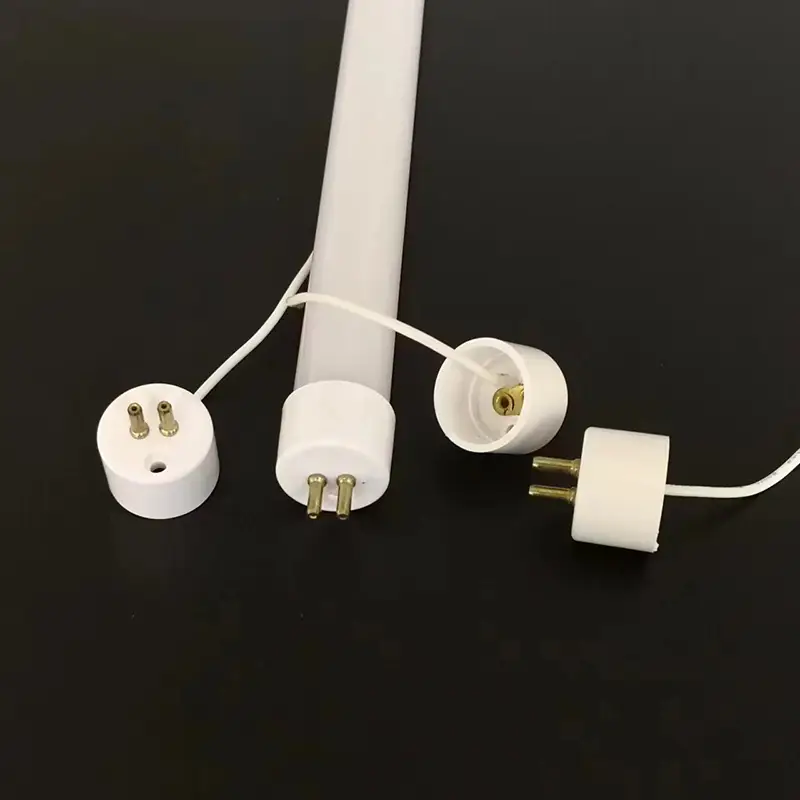
JE manufactures plastic and aluminum extrusions in Dongguan for OEM, ODM, wholesale, private-mold and project-based orders. Its tube categories include T5, T6, T8, T10 and T12. The featured T5 configuration is a 16 mm housing with a 6063 aluminum base, a clear or frosted PC or PMMA cover, plastic end caps and space specified for a 12 by 1 mm PCB. Standard and customized lengths are available, subject to quotation confirmation.
Specify a Diffuser Cover or a Complete Housing Assembly Before Quotation
The useful classification is supply scope. A diffuser-only order replaces or integrates one optical component. A housing order covers the mechanical set around the LED board. State the scope at the top of your RFQ; otherwise, a supplier may quote a cover while your purchasing team expects a lamp kit.
Diffuser-only supply: a clear or frosted PC or PMMA extruded cover
Choose diffuser-only supply if you already control the aluminum profile, end-cap design and internal electronics. Send the cover cross-section rather than relying on the name “T5.” T5 identifies a tube class, but it does not prove that snap features, wall geometry or mating tolerances match another manufacturer’s profile.
The drawing should show the cover’s overall envelope, wall and clip geometry, critical mating dimensions, cut length and any cosmetic limits. Also state whether you want PC or PMMA and a clear or frosted finish. A physical mating sample is useful when an old drawing has been revised, converted between units or stripped of tolerances.
Housing assembly: 16 mm cover, 6063 aluminum base and plastic end caps
JE’s featured 16 mm T5 LED tube housing combines the diffuser cover with a 6063 aluminum base and plastic end caps. The listed PCB size is 12 by 1 mm. Treat those figures as a starting configuration, not permission to skip fit review.
Confirm how the PCB is retained, where the driver sits, how wires pass into the end cap and whether your stated length refers to the extrusion or the assembled lamp. The housing does not by itself define LEDs, driver electronics, connectors or wiring. List every required part so the quotation makes inclusion and exclusion clear.
Use a Component Diagram and Cross-Section Drawing to Confirm PCB, Driver, End-Cap and Length Fit
A component diagram answers what belongs in the assembly. A cross-section drawing answers whether those parts physically fit. Send both if you are sourcing more than a loose diffuser.
- Diffuser interface: Mark the snap-in, slide-in or other mating features and identify dimensions that control retention.
- PCB: Give board width and thickness. For the featured JE profile, the stated PCB size is 12 by 1 mm, but your board stack-up still needs verification.
- LED and driver clearance: Show the tallest component and its location. A board may fit the rail while a connector, solder joint or driver component hits the cover.
- End caps: Identify closed, wired or connector-specific ends, along with screw holes, cable exits or other interfaces.
- Length convention: State whether the dimension is cut extrusion length, body length or overall finished length including end caps.
These details prevent the most common prototype failure: each individual part looks correct on paper, but the full stack cannot close or reaches the wrong finished length.
Choose PC or PMMA and Clear or Frosted Optics for the Intended Application
Material and finish solve different problems. PC versus PMMA is a material decision; clear versus frosted is an optical and appearance decision. Do not use “frosted polycarbonate” as shorthand unless both choices are intentional.
| Choice | Why buyers select it | What to verify before approval |
|---|---|---|
| PC cover | Commonly considered where impact resistance is a priority. | Required light transmission, diffusion, appearance, temperature conditions and any project-specific material rating. |
| PMMA cover | Often evaluated for optical clarity and surface appearance. | Mechanical exposure, handling conditions and suitability for the installed environment. |
| Clear finish | Keeps the LED points and internal construction more visible. | Whether visible diode images, wiring or board features are acceptable. |
| Frosted finish | Helps soften the view of individual LED points. | The acceptable trade-off between visual diffusion and delivered light. |
There is no honest universal answer for “best” material or finish. LED pitch, distance from the PCB to the cover, diffuser geometry and the viewing angle all affect the result. Approve the actual LED board behind a production-representative sample rather than judging an empty cover under office lighting.
Select a Standard Profile or Start a Custom T5 Diffuser Extrusion
A standard profile is the practical first choice when its envelope, PCB channel and end-cap arrangement fit your design. It avoids creating a new cross-section solely to reproduce a feature that already exists. Review JE’s 16 mm T5 LED tube housing against your mechanical stack before requesting tooling.
Start a custom T5 diffuser extrusion when the standard profile cannot meet a critical interface: a different snap geometry, board position, outside shape, internal clearance or end-cap connection. Custom work requires a controlled drawing. Label critical dimensions and tolerances instead of applying tight tolerances to every surface; unnecessary precision can complicate tooling and inspection without improving lamp performance.
Also state whether the project should use a public mold or a private mold. If design ownership, exclusivity or tooling custody matters, put those commercial requirements in the RFQ. Do not assume “custom” automatically means exclusive tooling.
Review Samples, Quality Evidence, Documentation and Delivery Terms
A sample should test assembly, not just color. Fit the intended PCB, driver, wires and end caps; check for cover retention, interference, visible LED images, scratches and cut-end quality. Record the approved sample or drawing revision so production acceptance is tied to something both parties can identify.
Which extrusion, mold-making and optical test records or material documents can JE provide?
Document availability should be confirmed for the specific profile, resin, finish and order. Ask JE to identify what can accompany your quotation or shipment rather than assuming every record is standard. Depending on your project, the request may include a dimensional inspection report, material identification, color or appearance reference, optical test data, mold or tooling information and sample approval records.
If your customer requires a particular certification, test method or restricted-substance declaration, name the exact document and required issuing party. A general material description is not the same as a project-specific compliance record. Resolve that distinction before approving production.
How are sample timing, production lead time, packaging and shipping confirmed for U.S. orders?
These terms depend on profile status, customization, quantity and destination, so they belong in the written quotation. Ask for separate confirmation of sample preparation, tooling if applicable, production lead time after approval, packaging method, shipment terms and the point at which the schedule begins.
For U.S. orders, provide the delivery city and ZIP code as well as your preferred transport method. Long extrusions may face different packaging and freight constraints than shorter cut pieces. Confirm carton or bundle protection, labeling, quantity per package and responsibility for import freight and charges before issuing the purchase order.
Request a Quote with Your Drawing, Length, PCB Size, Cover Choice, Quantity and Application
Send one controlled RFQ package containing:
- A PDF cross-section and, where available, a CAD file
- Diffuser-only or complete housing scope
- Required cut or assembled length, clearly defined
- PCB width, thickness and component-clearance information
- PC or PMMA, with clear or frosted appearance
- Standard-profile or custom-extrusion preference
- Prototype and production quantities
- Application, installation environment and required documents
- End-cap, packaging and U.S. delivery requirements
Request an LED T5 diffuser quotation from JE and attach the drawing package. The clearer the mating dimensions and supply scope, the easier it is to quote the right cover or housing instead of a part that merely carries the T5 name.