- English
- Español
- Português
- русский
- Français
- 日本語
- Deutsch
- tiếng Việt
- Italiano
- Nederlands
- ภาษาไทย
- Polski
- 한국어
- Svenska
- magyar
- Malay
- বাংলা ভাষার
- Dansk
- Suomi
- हिन्दी
- Pilipino
- Türkçe
- Gaeilge
- العربية
- Indonesia
- Norsk
- تمل
- český
- ελληνικά
- український
- Javanese
- فارسی
- தமிழ்
- తెలుగు
- नेपाली
- Burmese
- български
- ລາວ
- Latine
- Қазақша
- Euskal
- Azərbaycan
- Slovenský jazyk
- Македонски
- Lietuvos
- Eesti Keel
- Română
- Slovenski
- मराठी
- Srpski језик

LED Rail Vehicle Lamp Housing: EN 45545-2 Compliant Profiles
You need a housing that passes rolling stock fire standards without melting your bill of materials. The JE LED rail vehicle lamp housing pairs a 6063 aluminum heat sink with an EN 45545-2 compliant polycarbonate diffuser. It is built specifically for B2B lighting assemblers and contractors retrofitting heavy rail, subway cars, and transit buses where material failure is a massive liability.
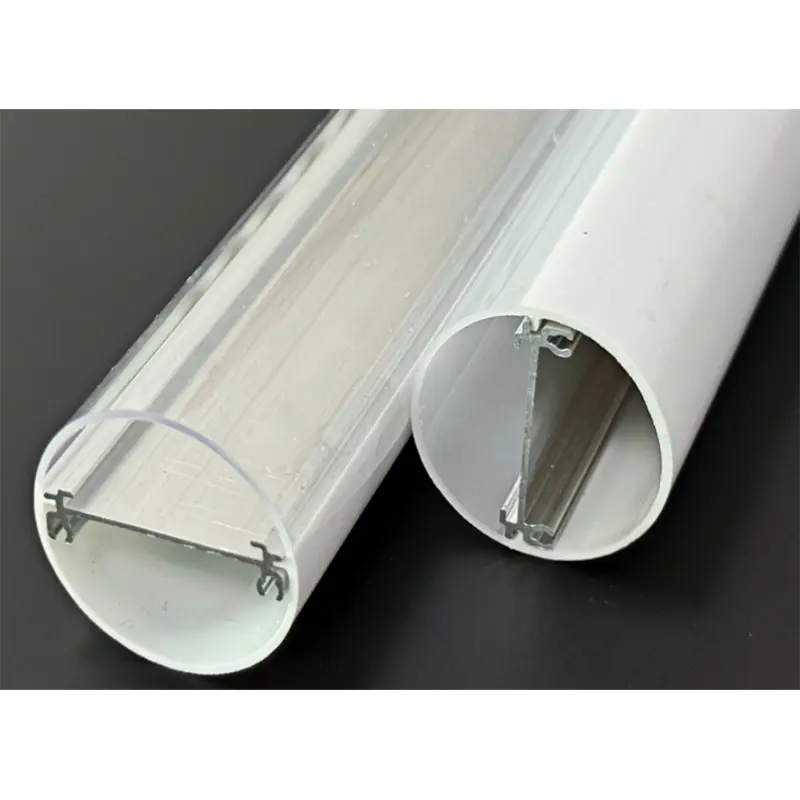
The JE-231 Polycarbonate and Aluminum Extrusion Profile
Pure plastic housings warp under the constant vibration of rail transit. All-aluminum fixtures weigh too much for continuous ceiling runs. The JE-231 profile solves this by combining a rigid 6063 aluminum alloy spine with a specialized polycarbonate cover.
The aluminum base acts as both a structural backbone and a thermal bridge. High-output LED strips generate localized heat that degrades diode lifespans if trapped inside a sealed plastic tube. The aluminum channel pulls that heat away, allowing the fixture to maintain its specified light output over a 50,000-hour service life.
For the cover, we extrude impact-resistant polycarbonate rather than standard acrylic. Acrylic snaps under physical impact. Polycarbonate flexes. This material choice prevents the housing from shattering if a passenger strikes it or a maintenance crew drops a tool during an inspection.
Fire Safety Compliance: EN 45545-2 and UL-94 V0 Ratings
Specifying transit lighting means navigating strict fire safety mandates. A standard off-the-shelf LED tube housing will fail a rolling stock audit immediately.
The polycarbonate used in our LED rail vehicle lamp housing is engineered to meet EN 45545-2, the European standard for fire behavior of materials in railway vehicles. This directive dictates strict limits on smoke opacity and toxicity. If a fire breaks out in a subway tunnel, passengers must be able to see the exits, and they cannot inhale toxic halogens emitted by burning ceiling plastics.
Simultaneously, the housing carries a UL-94 V0 flame retardant rating. Understand the difference between UL-94 ratings before you specify a plastic extrusion for passenger environments:
- V2 Rating: Stops burning within 30 seconds, but allows flaming drips. Completely unacceptable for overhead transit lighting.
- V1 Rating: Stops burning within 30 seconds, no flaming drips allowed.
- V0 Rating: Stops burning within 10 seconds, no flaming drips. This is the mandatory baseline for a heavy-duty transit LED tube housing.
Cheaper commercial plastics will melt and drop fire onto the seats below. Specifying a true V0 flame retardant LED transit lighting housing eliminates this critical failure mode.
IP65 Ingress Protection for Subway and Heavy Rail Environments
Train ceilings are hostile environments. Brake dust, carbon particulate, and high-pressure washing systems easily compromise standard commercial lighting fixtures.
An IP65 rail vehicle LED lamp housing prevents conductive dust from shorting out the internal PCB. The "6" in IP65 guarantees dust-tight performance. The "5" certifies that the housing withstands low-pressure water jets from any direction. When maintenance crews power-wash the interior of a subway car, the silicone seals and end caps keep moisture away from the internal electronics.
Achieving this rating requires exact extrusion tolerances. If the polycarbonate diffuser does not seat perfectly into the aluminum channel, thermal expansion will create micro-gaps over time. Our tooling process holds dimensional tolerances tight enough to maintain that IP65 seal across temperature swings from -20°C to 45°C.
Internal Clearances for 2026 IoT Sensor Integration
Transit authorities no longer just buy lights. They buy ceiling-mounted power rails for occupancy sensors, Bluetooth beacons, and automated public address modules.
When you specify a housing, the internal clearance dictates your upgrade path. A standard 26mm diameter LED train lamp housing fits a basic T8-style PCB perfectly. However, if your transit contract requires integrating IoT hardware directly into the luminaire, you need a profile with a deeper internal cavity.
The JE-231 series provides dedicated internal slots. You slide the primary LED board into the bottom thermal channel, leaving the upper clearance open for secondary cabling or low-profile sensor boards. This separation prevents signal interference and keeps the wiring harness organized during final assembly.
Specifying Custom Lengths and PCB Dimensions for OEM Assembly
Off-the-shelf dimensions rarely fit custom transit ceilings. A subway car LED lamp housing often stretches to 2400mm or requires continuous, gap-free runs to match the railcar's interior design.
As a Chinese manufacturer with eight years of extrusion experience, JE operates as a direct T8 LED train lighting housing OEM. We cut profiles to exact project specifications, drastically reducing the on-site fabrication required by your assembly teams.
You must match the housing's internal track width to your PCB. A board that sits too loosely in the channel will rattle under train vibration, eventually fatiguing the solder joints until the light fails. A board that is too tight will bow during thermal expansion. We extrude custom LED rail vehicle lighting profiles with precise board slots to match your specific FR4 or aluminum PCBs.
| Specification Check | Why It Matters for Assembly |
|---|---|
| PCB Track Width | Must match your board exactly (e.g., 10mm, 12mm). Prevents vibration rattle and thermal bowing. |
| Housing Length | Custom cuts up to 2400mm reduce splicing and minimize points of water ingress. |
| End-Cap Sealing | Determines final IP rating. Requires precise screw hole alignment to compress the silicone gasket. |
Procurement and Sampling for US Transit Projects
Sourcing components for North American transit projects requires balancing strict compliance with production scale. Engineering teams often waste weeks testing housings that ultimately fail fire certification.
Start by verifying the physical fit and thermal performance. You can request cut samples of our EN 45545-2 compliant LED tube housing to run your own IP testing, vibration mock-ups, and thermal analysis.
Once your engineering team signs off on the extrusion profile and end-cap seals, we move to volume production. Standard lead times run 15 to 20 days for existing molds. If your contract requires a modified cross-section or specific mounting brackets for an older subway fleet, custom tooling adds roughly two weeks to the initial timeline. Evaluate the samples, verify the V0 rating in your own lab, and lock in your assembly dimensions.