- English
- Español
- Português
- русский
- Français
- 日本語
- Deutsch
- tiếng Việt
- Italiano
- Nederlands
- ภาษาไทย
- Polski
- 한국어
- Svenska
- magyar
- Malay
- বাংলা ভাষার
- Dansk
- Suomi
- हिन्दी
- Pilipino
- Türkçe
- Gaeilge
- العربية
- Indonesia
- Norsk
- تمل
- český
- ελληνικά
- український
- Javanese
- فارسی
- தமிழ்
- తెలుగు
- नेपाली
- Burmese
- български
- ລາວ
- Latine
- Қазақша
- Euskal
- Azərbaycan
- Slovenský jazyk
- Македонски
- Lietuvos
- Eesti Keel
- Română
- Slovenski
- मराठी
- Srpski језик

LED Aluminum Profiles in Real Projects: Lessons from Rework and Long-Term Performance
LED Aluminum Profiles
In lighting-related work, this is one of those components that people tend to ignore at first—and later end up relying on the most.
I didn’t fully understand the importance of LED aluminum profiles until I had to go through a rework.
The project itself wasn’t complicated—just a medium-sized commercial space built around linear lighting. My role at that time was somewhere between lighting coordination and project execution. In simple terms, I was the person caught between the designer, the construction team, and the client.
Early Planning Stage
During the planning stage, everything seemed to be going smoothly:
- The specifications of the light strips were chosen
- The color temperature was confirmed
- The mock-up effect looked neat and tidy
The real issue didn’t show up until about three months after handover.
In practice, these kinds of problems are rarely caused by design mistakes, but by structural details that weren’t taken seriously enough.
The Problem Appears
The owner's feedback was quite simple:
"There are several sections of the lights that are noticeably dimmer and have different colors."
As the person responsible for the project, my first reaction wasn’t that the lights had failed, but to consider:
- Heat
- Installation
- Long-term operating environment
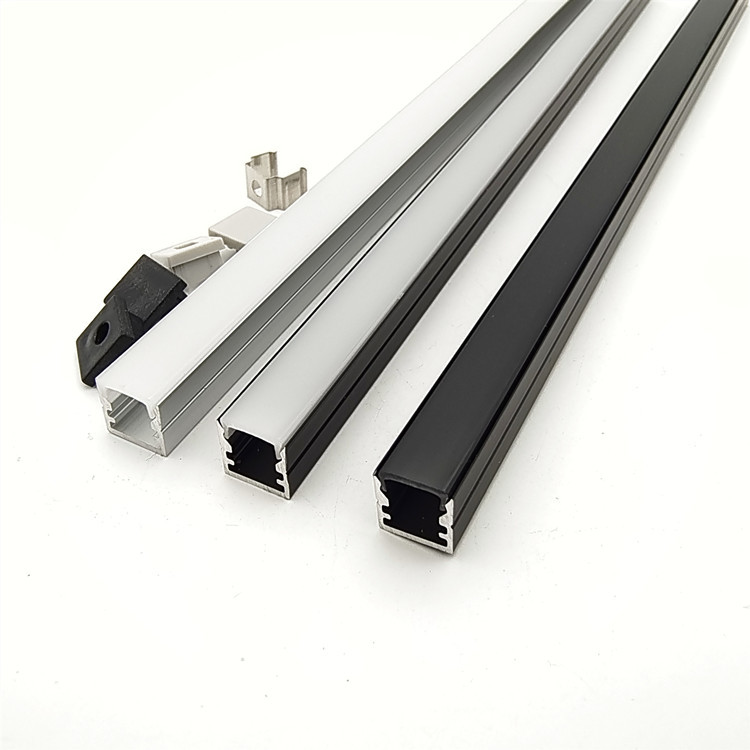
After disassembling and inspecting, it was found that the light strip itself had no obvious quality issues and the driver was functioning properly. The real problem was that the light strip was directly installed in a sealed structure, with no effective heat dissipation path.
Had proper LED aluminum profiles been used from the beginning, this issue would very likely have been avoided.
At the time, however, it was treated as something “optional” during professional discussions.
Different Roles, Different Perspectives
Different roles on a project tend to have very different understandings of LED aluminum profiles.
After working with people in different roles over the years, a clear pattern started to emerge.
Lighting Designer
More attention is paid to the form of the light, whether the lines are smooth, and whether the "light source" is invisible.
For them, aluminium profiles are the means to achieve the design intention.
Interior Designer
More importantly, one needs to consider whether it affects the spatial proportions and whether it disrupts the continuity of the materials.
Also, whether it can be "hidden away".
Electrical or installation end
The concern is:
Is it easy to install?
Is the wiring convenient?
Can it be disassembled later?
Project Manager / Owner Representative
Only care about two things:
Will there be a rework?
It will start to have problems in a few years.
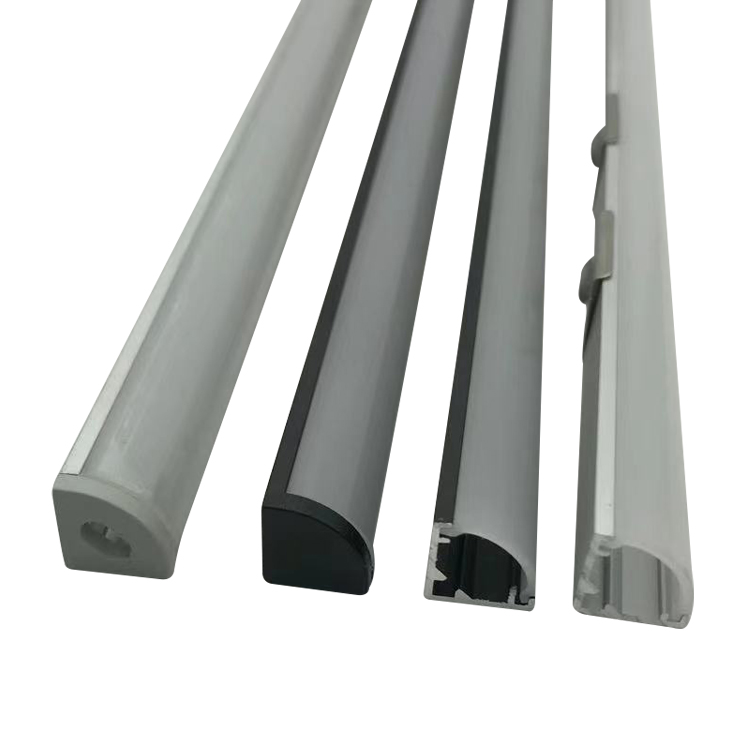
And LED Aluminum Profiles are precisely located at the intersection of these several professions.
If this point is not handled properly, all positions will be affected.
A Shift in Mindset
So why did I start to use LED aluminum profiles almost by default midway through my career?
The shift was quite noticeable:
When I first started in this field, I would ask:
"Should we use aluminum profiles here?"
Now I ask:
"Why aren't we using them here?"
The reason behind it is very practical.
1.Long Operating Hours Change Everything
In spaces where lighting stays on for long hours, bare LED strips almost inevitably run into problems.
Office area, commercial corridor, retail space—they are all illuminated for over ten hours a day.
Without metal structure for heat dissipation, light attenuation is just a matter of time.
2. Uncontrollable Variables in Professional Projects
The differences in the construction team's experience and the on-site conditions will all affect the final outcome.
Standardized LED aluminum profiles exist largely to reduce human error.
3.Long-Term Cost Reality
The maintenance costs in the later stage are much higher than the initial construction costs.
Revising once is much more costly than getting the structure right from the beginning.
This is a reality that all those who have prepared project budgets would agree on.
How I Select Aluminum Profiles in Practice
In my work, how do I select different types of aluminum profiles based on the specific professional scenarios?
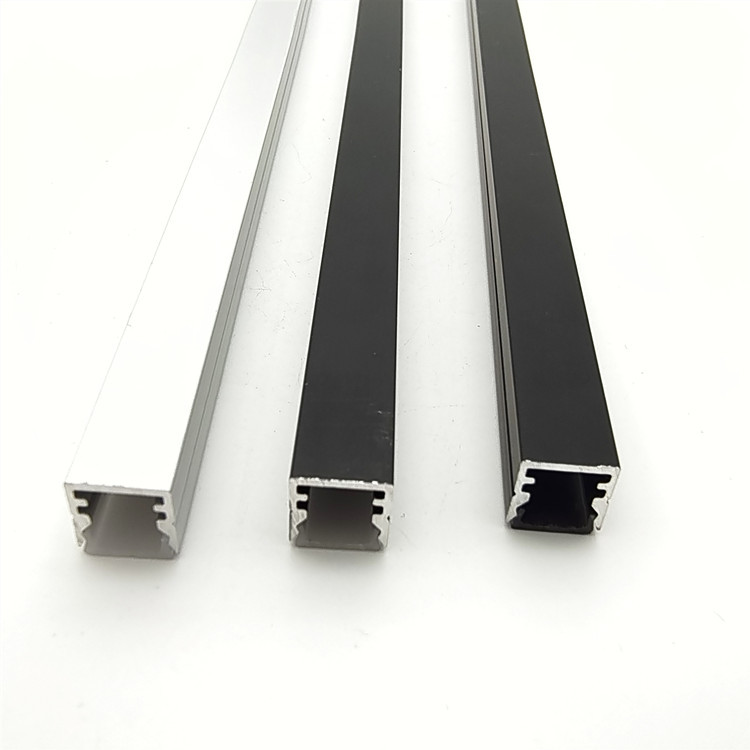
Not all LED Aluminum Profiles are the same. I never apply a one-size-fits-all approach.
For office and business projects
My top priority is:
- The thickness of the aluminum material is stable
- The heat dissipation area is sufficient
- High dimensional consistency
The core of these projects is not "appearing attractive", but rather achieving long-term stable operation.
For residential and custom furniture projects
I am more concerned with:
- Diffusion effect
- Can the light source be completely hidden?
- The compatibility with woodwork and stone materials
In locations such as wardrobes, cabinets, and staircases, if the lighting is too bright, the experience will be greatly intensified.
For chain or replicable projects
The most important thing is:
- Can the same model be supplied continuously for a long time?
- Is the difference between batches controllable?
In such projects, I would rather choose a "moderately decent but stable" structure.
Diffuser Covers Are Often Misjudged
The diffusion hood is the root cause of many occupational misjudgments.
I have met many colleagues who focus all their attention on the parameters of the light strips, but neglect the diffuser covers.
From the perspective of professional experience:
Transmittance ≠ Looks good
The atomization is not sufficient. You should definitely be able to see the light points.
Whether it turns yellow after long-term use is extremely important.
During the project acceptance stage, these problems usually come to light, but by that time it is already very difficult to remedy them.
On Brands and Systems
Regarding the materials and the system, this is not a matter of personal preference for the brand, but rather a professional judgment.
I don't really care who is more "well-known" in the market. Instead, I pay more attention to:
- Is the specification clear?
- Is the system complete?
- Is the parameter consistently stable over a long period of time?
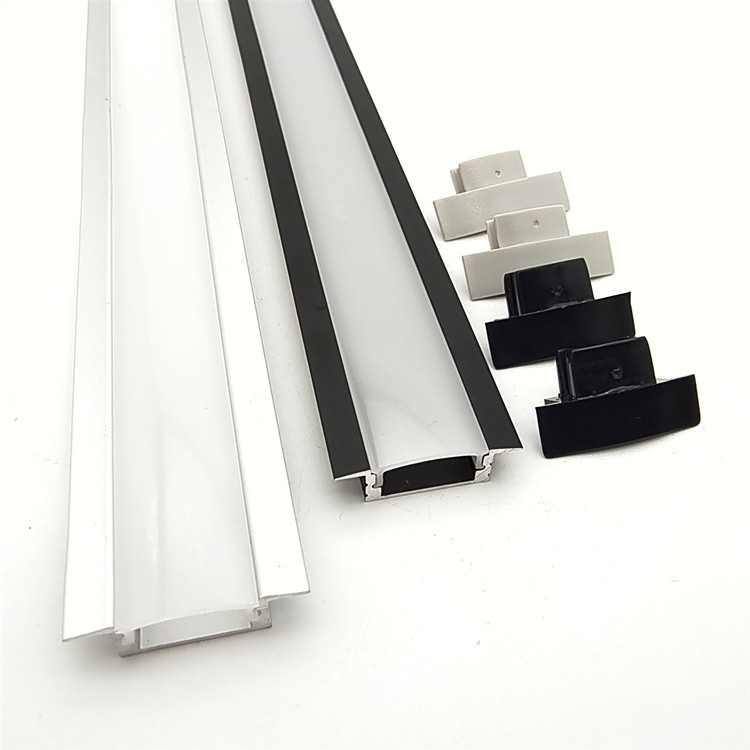
While reviewing the technical materials and past project records, I saw the name "Jinen" numerous times in some aluminum profile systems with relatively strict structural specifications. It's not a name that can be easily remembered at a glance, but from a professional perspective, such low-key and parameter-stable systems are more likely to be adopted by the engineering side for a long time.
This is not a recommendation; it's merely a perception formed from the perspective of the project.
A Broader Industry Shift
LED Aluminum Profiles are transforming the working methods of many professions.
A notable change is that:
Nowadays, more and more projects consider aluminum profiles as the structural foundation during the design stage, rather than adding them as an afterthought later.
The lights are no longer "added on", but "embedded into the structure".
For those of us who make a living from project delivery, this is a positive trend.
Because it means:
- Less rework
- A more predictable outcome
- Clearer boundaries of responsibilities
Final Advice
The last bit of experience for colleagues:
If you are engaged in a profession related to space, lighting or engineering, my advice is simply one sentence:
Don't treat LED Aluminum Profiles as an accessory; it is an integral part of the system.
It may not steal the spotlight in the design renderings, but it will repeatedly demonstrate its value throughout the project's lifecycle.
And my professional experience has taught me one thing:
What truly affects the reputation is not the brightest light, but rather those details that remain "unproblematic" even after several years.
I hope that these experiences from real working scenarios will be useful in your next project.